
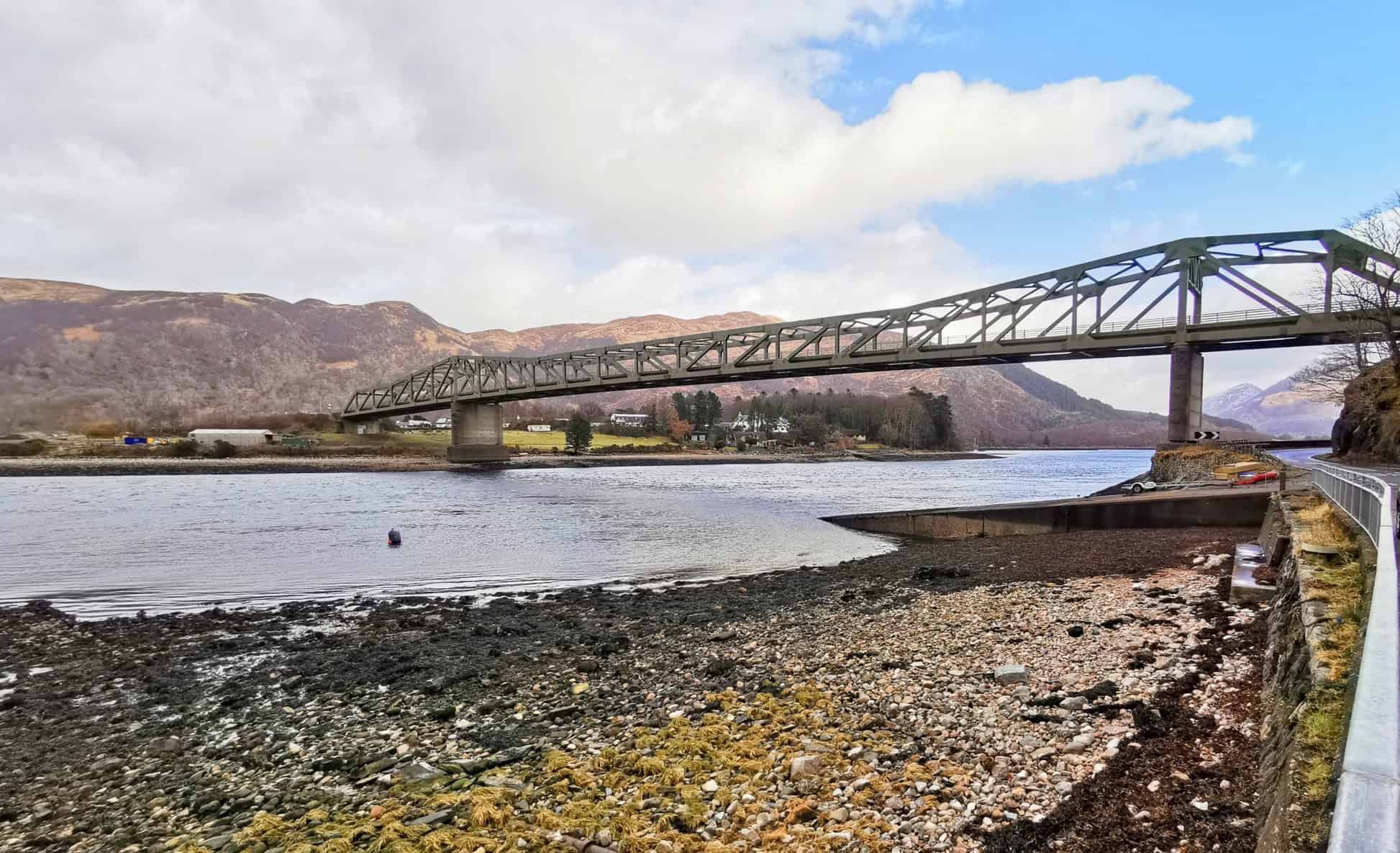
On 14 May 1752, Colin Roy Campbell of Glenure – the ‘Red Fox’ – was shot in the woods at Lettermore. Following the Jacobite defeat in 1746, Campbell had actively contributed to the forfeiting of several pro-Jacobite estates, and it is thought he was on his way to evict Stewart families from homes they had lived in for generations when he was shot and killed.
Within two days of the murder, James Stewart of the Glens (Seamus a’ Ghlinne) was arrested and imprisoned initially in Fort William, and then taken to Inverarary. He was tried by a jury of eleven Campbells. The presiding Judge was the Duke of Argyll – the Chief of Clan Campbell – who was also brother to Colin, the Red Fox. James didn’t stand a chance. Even though he had a solid alibi at the time of the shooting, he was charged as an accessory instead and sentenced to death.
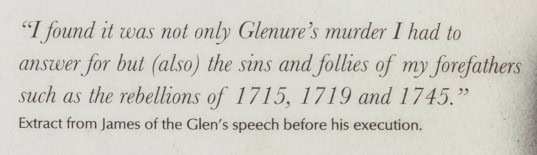
Seamus a’ Ghlinne was hanged on 8 November 1752 on a specially commissioned 30 foot gibbet above the narrows at Ballachulish. The exact spot is near the southern entrance of the steel truss Ballachulish Bridge built in 1975. The views seen here in the short video below, minus the steel, would have been the very last that James would have seen.
James died protesting his innocence, distraught that others would think him capable of such a barbaric crime. Before mounting the scaffold, he recited the 35th Psalm in Scottish Gaelic. To this day in the Highlands, this remains known as ‘The Psalm of James of the Glens’.
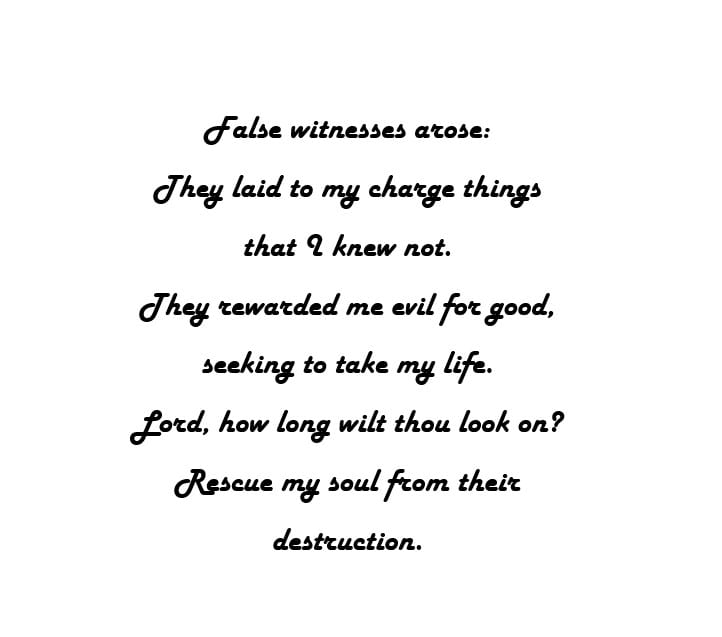
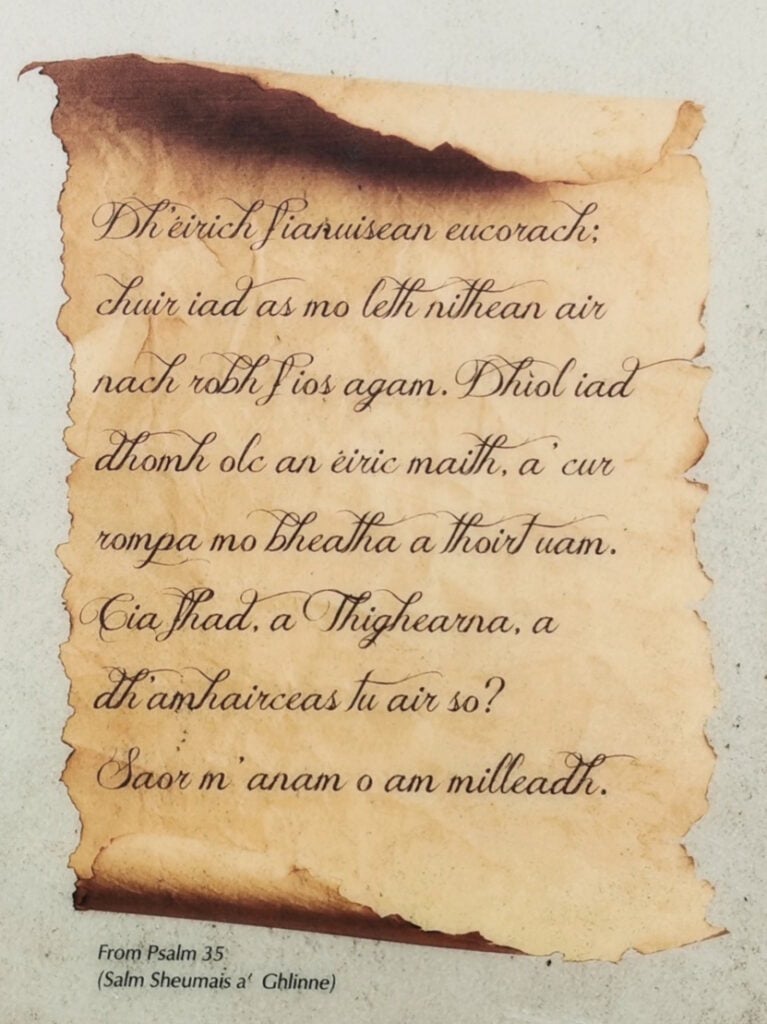
James’ corpse was left hanging there for eighteen months as a warning to other Clans with rebellious intentions. Military Guard remained on watch during that time. Over those months, James’ body was beaten and battered by winds and rain, sometimes even having to be rehung after blowing down in severe storms. As his remains deteriorated, the pieces of his skeleton were held together with chains and wire. His body was believed to have been eventually taken away in the dead of night by his family and given a quiet burial in nearby Keil graveyard.
In 1911, a monument was erected on the site of James Stewart’s execution. The large stone erected at the top of his monument was one that James loved to sit upon at his farm as he looked out over his land. The monument is on the left side of the road when travelling towards Fort William and we had just driven past it in the short video above.
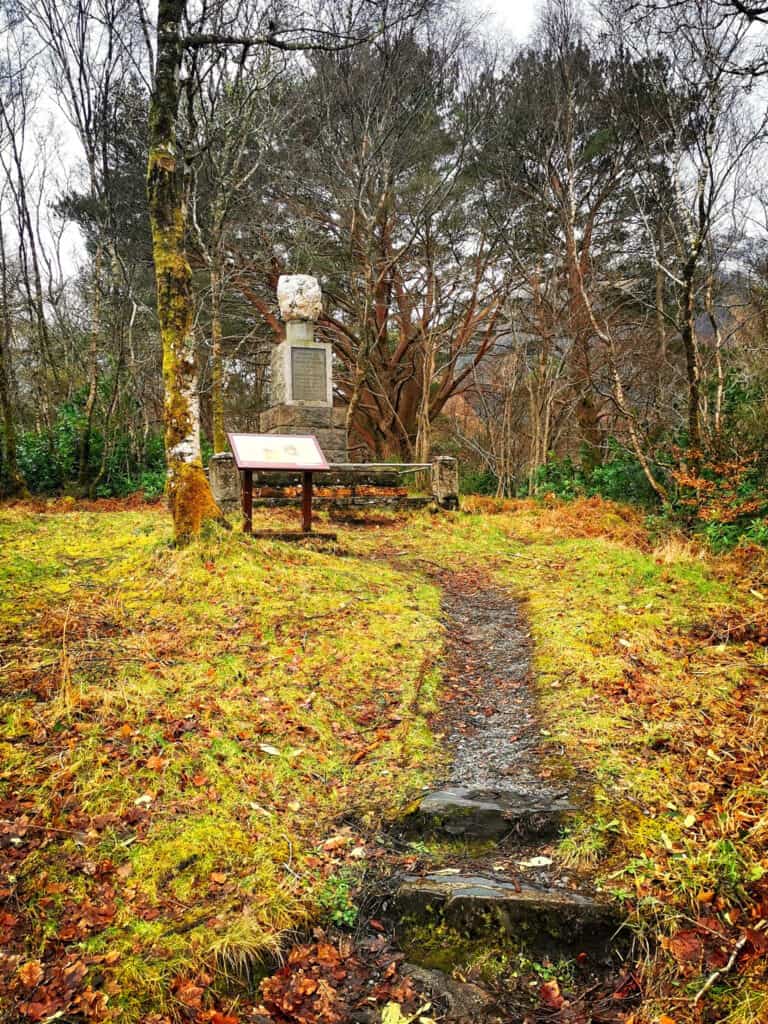
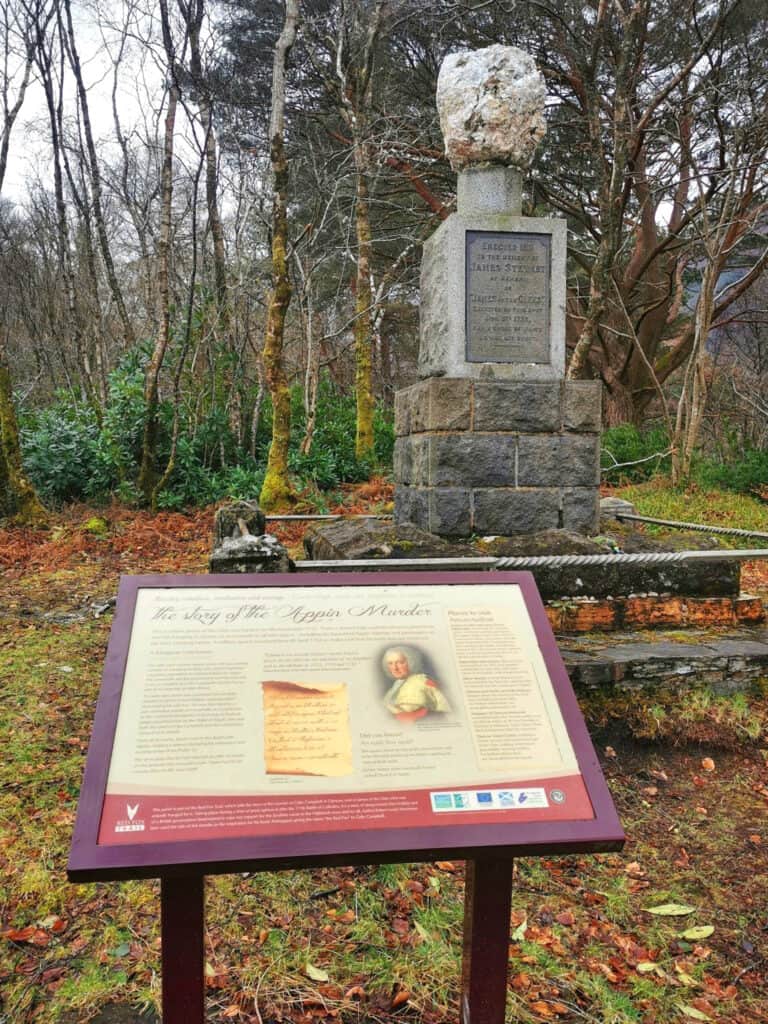
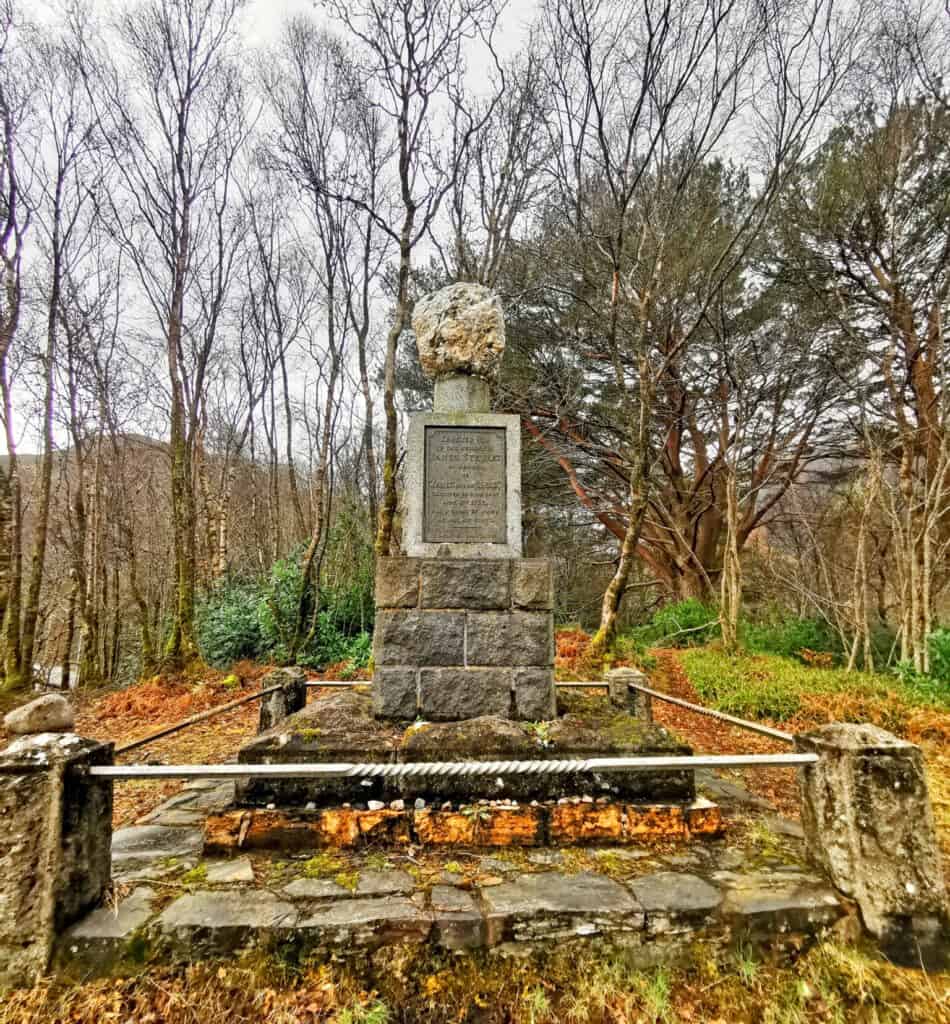
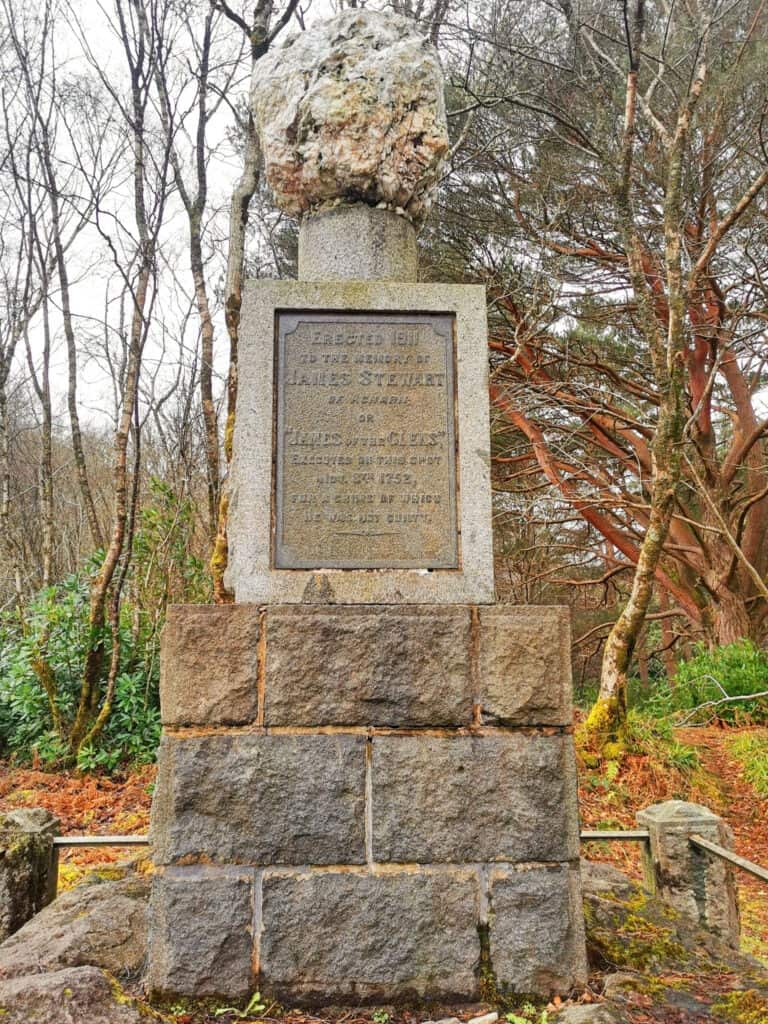
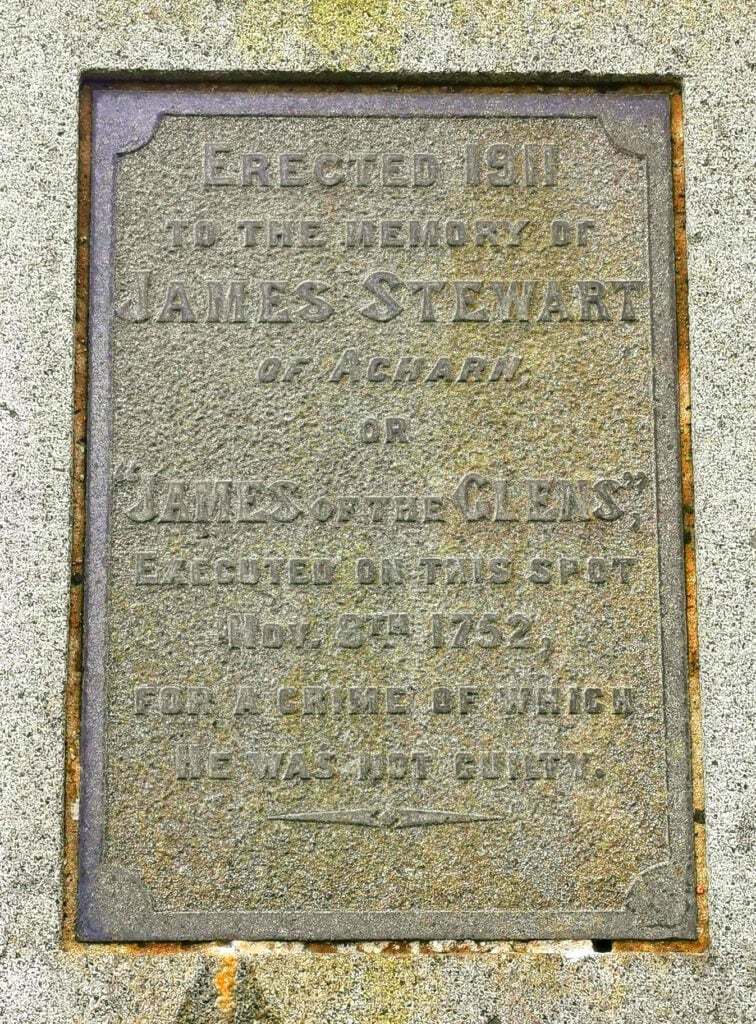
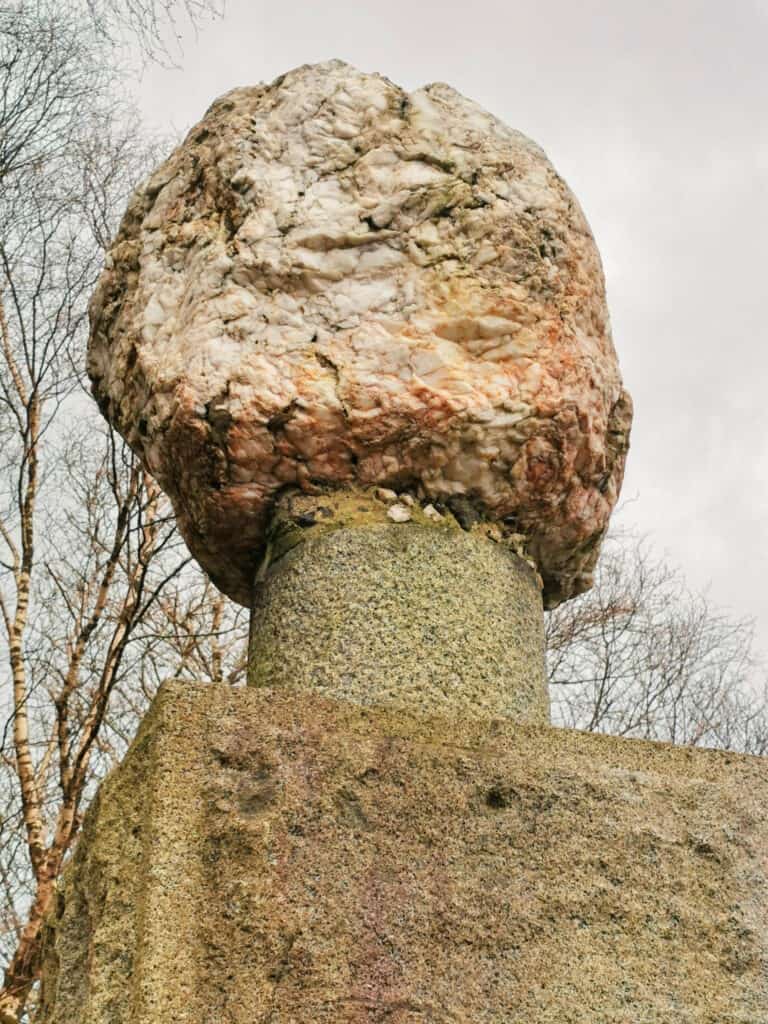
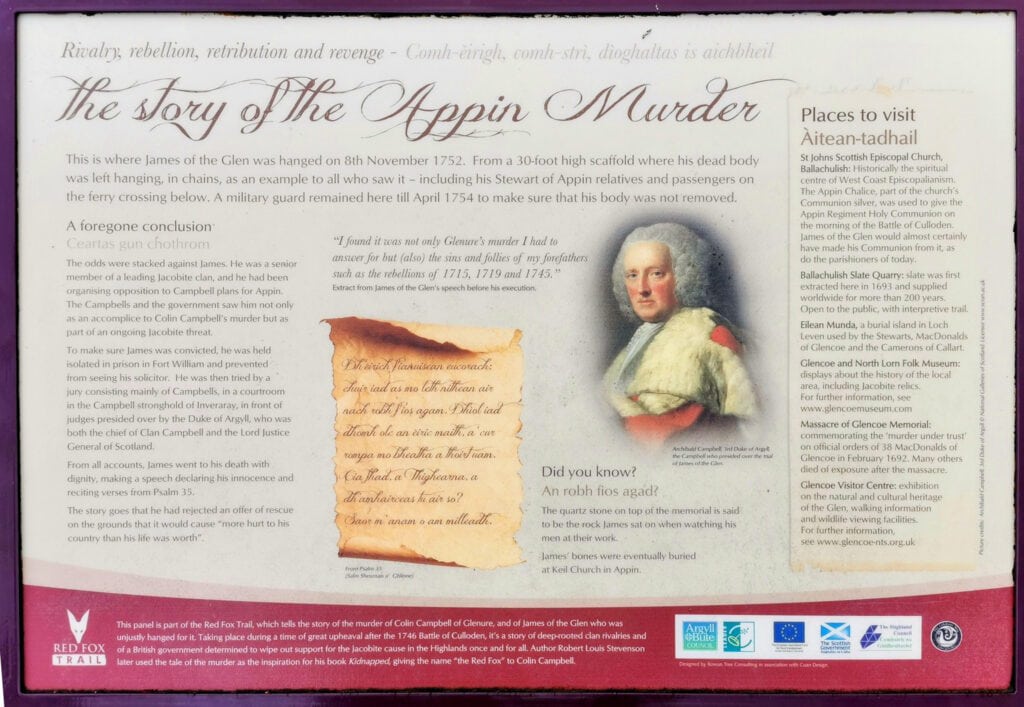
James was born in 1702 in a small house on a hillside in Glen Duror. The house of his birth is now an old Bothy, where Hikers can stay overnight when walking the Highlands. There is a sign inside the Bothy which reads ‘Aite-Breith Seamus a’ Ghlinne‘ – Birthplace of James of the Glen. I wonder how many hikers who stay there overnight are aware of what that truly means.
James undoubtedly went to the gallows an innocent man, and the identity of the real perpetrator is one of the best-kept secrets in Scottish history. This ‘secret’ is said to have been passed down through generations of the Stewart family.
The story behind the Appin Murder inspired Robert Louise Stevenson to write ‘Kidnapped’.
There are many theories as to who fired the bullet that killed Colin Campbell. Could it have been Donald Stewart of Ballachulish, who was an excellent marksman and who apparently had to be physically restrained by members of his family on the day of the execution to prevent him from turning himself in? Or could it have been Alan Breck Stewart (a character in Robert Louis Stevenson’s ‘Kidnapped’), who had publicly threated Colin Campbell and fled soon after the murder? Or could it even have been a member of Colin Campbell’s own family – Mungo Campbell – Colin’s nephew, who was with his uncle on the day he died, and who then inherited his position and wealth?
We will never know for sure…
However, rumour has it that there are still those who claim to be one of the very few people to know what really happened on the day of Colin Campbell’s death…
Rest in Peace James…
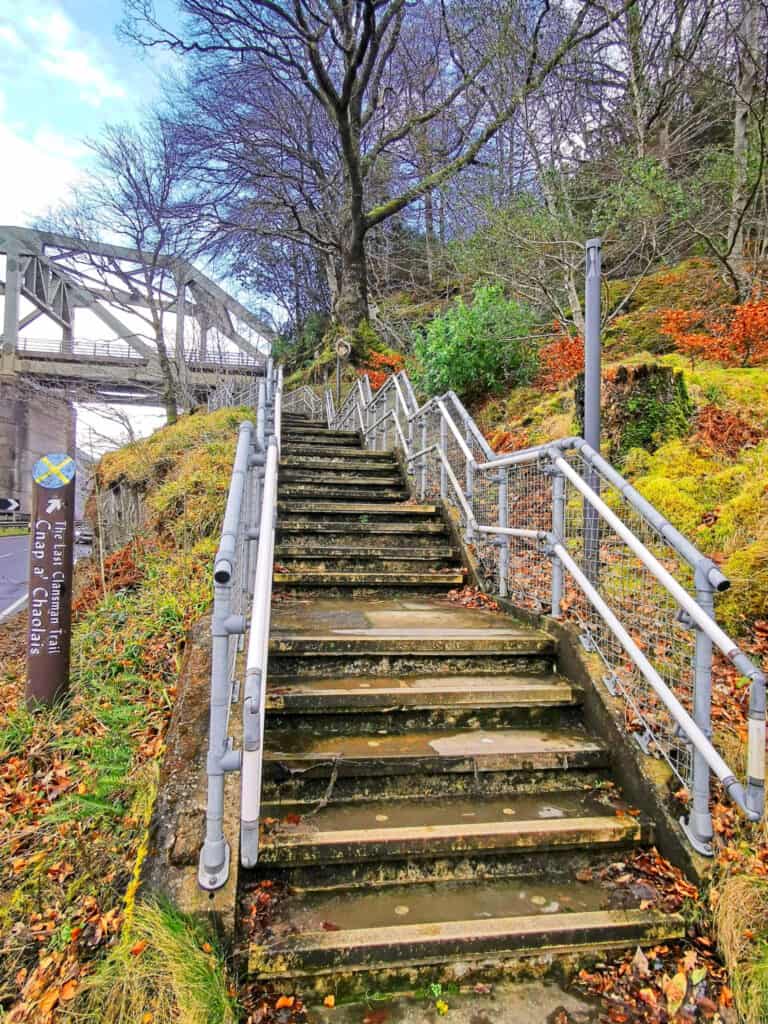
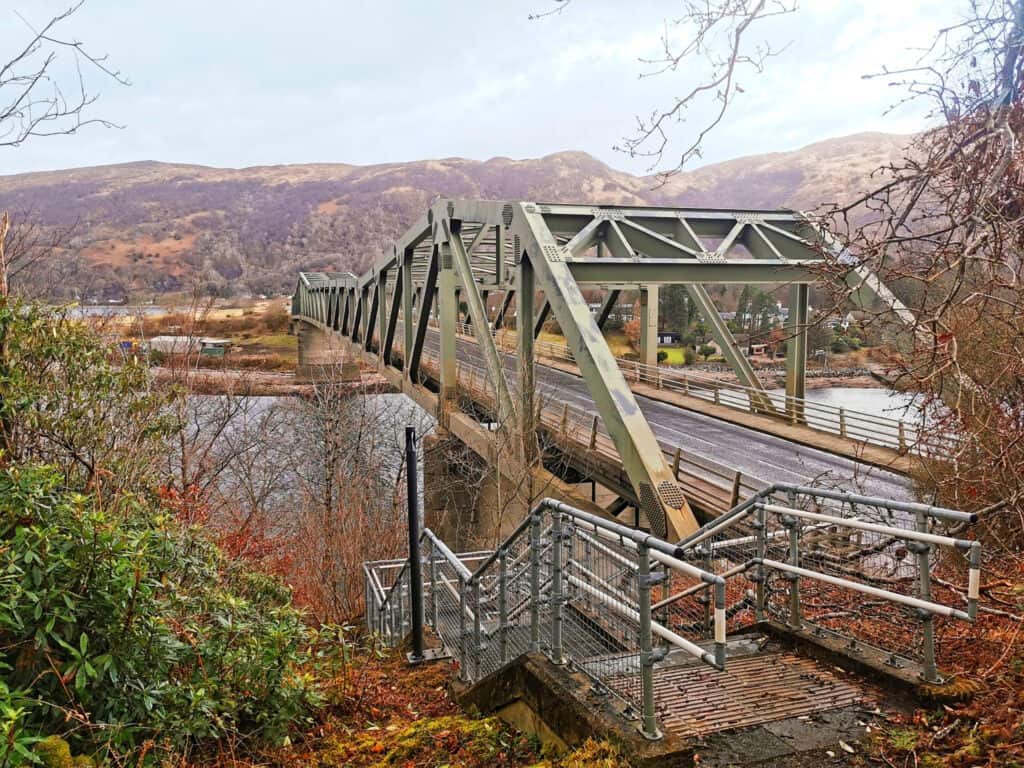
The photos above left shows the steps leading up the James’ Stewart’s Monument from beneath the Ballachulish Bridge. You can park safely there, near the front of the Ballachulish Hotel. The steps take you up quite high, reaching the same height as the top of the steel frame of the Ballachulish Bridge.
IMPORTANT – Please do not park on the main A82 road near the entrance to the bridge shown in the photo on the right. Doing so would create a very dangerous hazard for you and other drivers. The A82 road is a 50 mile per hour fast-moving main road into the Highlands, and all traffic will be moving at that speed. There is no parking there, other than a bus stop which is only for buses (it is illegal to park in a bus stop). So please seek out the safest route for yourself and others, and drive beneath the Ballachulish Bridge by searching for the Ballachulish Hotel and parking near there.


0 Comments